
 Image 1 of 1
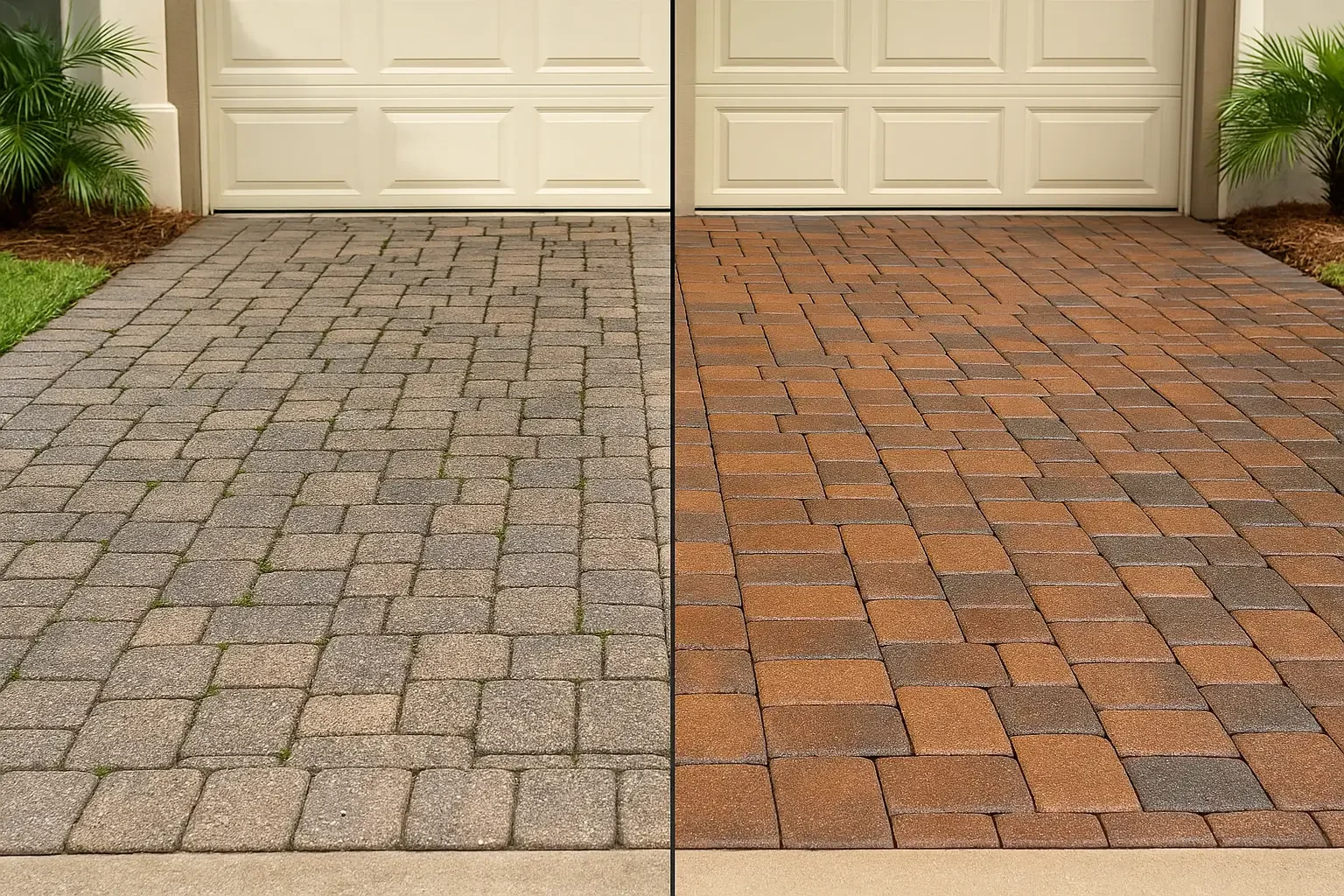
Sealing your pavers is an essential step in maintaining their appearance and durability. The sealing process protects against staining, weather damage, and wear while enhancing the color and vibrancy of your paved surfaces. Here’s how the sealing process works:
Preparation:
Assessment: Before sealing, we assess the condition of the pavers to determine if any repairs are necessary, such as replacing damaged pavers or addressing issues with the joints.
Drying Time:
After cleaning, it's crucial to allow the pavers to dry completely. The surface must be free of moisture to ensure proper adhesion of the sealant. This usually requires several hours, depending on weather conditions. Damp pavers can be sealed with a water based sealer with no issues.
Choosing the Right Sealant:
We select the appropriate sealant based on the type of pavers and specific needs. Sealants can be film-forming (creating a shiny protective layer) or penetrating (allowing the pavers to breathe while preventing moisture infiltration).
Applying the Sealant:
Method: The sealant is applied using specialized equipment such as a roller, sprayer, or brush, depending on the area size and accessibility. We ensure even coverage of the entire surface, paying special attention to joints and edges.
Multiple Coats: In some cases, a second coat may be applied after the first coat has dried (following the manufacturer's recommendations). This enhances protection and durability.
Working in Sections:
To prevent overlap marks and streaks, we work in manageable sections, ensuring that each area is thoroughly sealed before moving on to the next portion.
Drying and Curing:
After the application, we allow the sealant to dry and cure as per the manufacturer's instructions. This drying time can vary based on the type of sealant used, humidity, and temperature. During this period, it's crucial to keep foot traffic off the freshly sealed surfaces to avoid imperfections.
Final Inspection:
Once the sealant has fully cured, we conduct a final inspection to ensure uniformity and quality. Any touch-ups needed will be addressed at this stage.
Sealing your pavers is an essential step in maintaining their appearance and durability. The sealing process protects against staining, weather damage, and wear while enhancing the color and vibrancy of your paved surfaces. Here’s how the sealing process works:
Preparation:
Assessment: Before sealing, we assess the condition of the pavers to determine if any repairs are necessary, such as replacing damaged pavers or addressing issues with the joints.
Drying Time:
After cleaning, it's crucial to allow the pavers to dry completely. The surface must be free of moisture to ensure proper adhesion of the sealant. This usually requires several hours, depending on weather conditions. Damp pavers can be sealed with a water based sealer with no issues.
Choosing the Right Sealant:
We select the appropriate sealant based on the type of pavers and specific needs. Sealants can be film-forming (creating a shiny protective layer) or penetrating (allowing the pavers to breathe while preventing moisture infiltration).
Applying the Sealant:
Method: The sealant is applied using specialized equipment such as a roller, sprayer, or brush, depending on the area size and accessibility. We ensure even coverage of the entire surface, paying special attention to joints and edges.
Multiple Coats: In some cases, a second coat may be applied after the first coat has dried (following the manufacturer's recommendations). This enhances protection and durability.
Working in Sections:
To prevent overlap marks and streaks, we work in manageable sections, ensuring that each area is thoroughly sealed before moving on to the next portion.
Drying and Curing:
After the application, we allow the sealant to dry and cure as per the manufacturer's instructions. This drying time can vary based on the type of sealant used, humidity, and temperature. During this period, it's crucial to keep foot traffic off the freshly sealed surfaces to avoid imperfections.
Final Inspection:
Once the sealant has fully cured, we conduct a final inspection to ensure uniformity and quality. Any touch-ups needed will be addressed at this stage.